Explainer
How Many Security Cameras Do I Need for My House?
Count approaches, not rooms. Walk the outside of the building and list every route a person can take to reach it: front door, driveway, back or patio door, side gate, second street frontage. That list is your camera count, and for most single-family homes it comes to four to six.
Written by Joe Kiemtore, Owner, AyalaKi Services
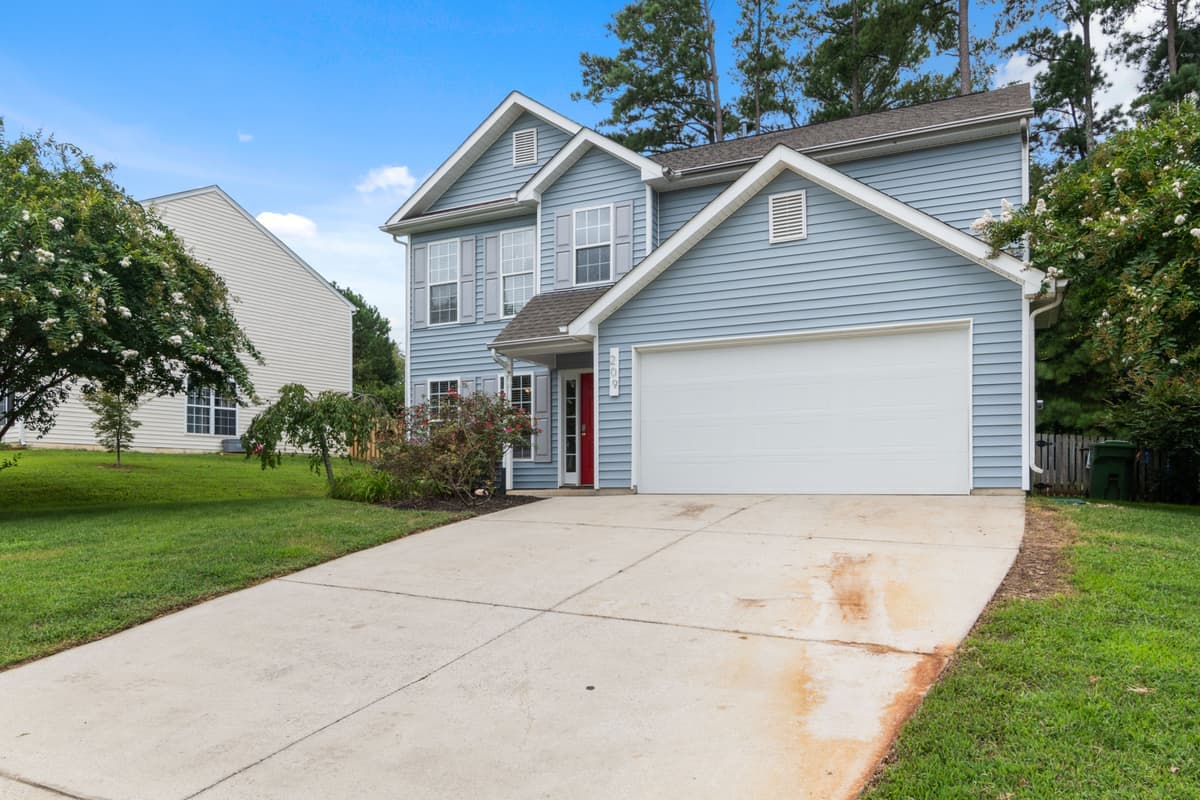
The method: count approaches
An approach is any route a person can take to reach the building on foot. Not a side of the house, not a room, not a window. Walk the perimeter and count them, and you will usually find there are fewer than you feared and more than you had cameras for.
For a typical single-family home the list runs:
- Front door. Positioned for identification: angled across the approach so someone walking up passes through the frame rather than appearing at the door already.
- Driveway or street approach. Vehicles, deliveries, and anyone who comes up the drive rather than the path.
- Back or patio door. The entry point most often used and least often covered.
- Side gate or alley access. One per gate. A side return with a gate at each end is two approaches, not one.
- Second street frontage, if you are on a corner.
That is four to six positions for most homes, and crucially it does not scale with square footage. A 4,000 square foot house with the same five approaches needs the same five cameras as a 2,000 square foot one.
Typical counts by property
Why fewer, better positions win
Given a fixed budget, four well-placed cameras beat eight compromised ones, and it is not close. The reason is what a camera is for. An overview shot tells you something happened. An identification shot tells you who. Only the second is worth anything to an insurer or to anybody investigating, and getting it depends almost entirely on position.
Three things decide whether a position yields a usable face:
Height. Eight to ten feet is the working window. High enough to be out of reach, low enough that the camera is looking at a face rather than the top of a head. Mounting at the eaves of a two-story house looks tidy and produces footage of scalps.
Angle. Across the approach, not down it. A person walking toward the camera is in frame for several seconds; a person walking under it is in frame for one.
Lens choice. A wide-angle lens sees more and resolves less. At a doorway or a gate, where you know people pass through a predictable point, a narrower lens gives you far more detail on the thing you actually care about.
Lighting matters too. A camera pointed at a bright sky or a security light will expose for the bright area and silhouette anyone standing in front of it. Infrared night modes help, but they have a real range limit, usually much shorter than the specification suggests once there is anything in the frame to absorb the light.
Interior cameras
Inside, the approach method changes to a choke-point method. One or two cameras at a place everyone has to pass — a hallway, a landing, the top of the stairs — are worth more than one in each room, because anyone moving through the house crosses them.
This is also the point to have the conversation with everyone who lives or works in the building, before anything is installed rather than after. Cameras inside a home are a different proposition from cameras outside it, audio recording is a further step again, and the time to agree what is acceptable is at the planning stage. In a workplace, the same applies with more formality: staff areas, break rooms and anywhere people would reasonably expect privacy should be excluded by design.
Counting for a small business
The business version of the same method has a reliable priority order, and following it beats spreading cameras evenly:
- Customer entrance, framed for identification rather than overview.
- Every non-public door, including deliveries and fire exits.
- Where money or controlled stock is handled — the register, the safe, the stockroom.
- Parking, dumpster or loading area, but only if there is a position with a genuine sightline.
Everything after those four is refinement. More detail on the commercial case is on the small business security camera installation page.
What the count then decides
The camera count is the input to three other decisions, which is why getting it right first saves money.
Recorder channels. A recorder accepts a fixed number of cameras. Buying a four-channel recorder and then deciding you need six is a replacement, not an addition, so it is worth sizing with one spare channel.
Storage. Retention is camera count times resolution times frame rate against drive capacity. Six 4K cameras need substantially more drive than six 1080p ones for the same number of days.
PoE power budget. A switch or recorder supplies a total wattage across all ports, and cameras draw different amounts depending on their class. The relevant standards and power levels are published by the Ethernet Alliance. Exceeding the budget is a step change in cost, not a gradual one, which is another reason to settle the count before buying anything.
One compatibility note: cameras and recorders from different makers often interoperate through ONVIF profiles, though some features only work within a single manufacturer’s ecosystem. Settle the recorder and the cameras together.
Positions people regret
- A doorbell camera as the whole system. It gives you an excellent view of the doorstep and nothing of the driveway, the yard or the back of the house.
- A camera on every side of the house. A blank wall with no door and no window is not an approach. That camera is watching bricks.
- Mounted too high. The most common single mistake, and it turns every camera into an overview camera.
- Pointed at a street or a neighbor. Legally murky, socially worse, and usually unnecessary. A few degrees of rotation or a privacy mask in the recorder solves it.
- In the path of a sprinkler. A surprisingly common cause of a lens that goes cloudy within a season.
Once the count and the positions are settled, the cost guide covers what moves the price around them.
Sources
Every figure quoted on this page comes from one of the sources below, and each is linked so you can check it. Where a source is dated, the date is given, because cost figures age.
- ONVIF Profiles(opens in a new tab)
ONVIF. Interoperability profiles referenced when explaining camera and recorder compatibility. Read 2026-10-11.
- Overview of IEEE 802.3bt Power over Ethernet(opens in a new tab)
Ethernet Alliance. PoE class and power-budget figures used in the recorder-sizing section. Read 2026-10-11.