Church sound system installation
Speaker coverage, mixing, microphones and training for your volunteers.
Read more
Audio visual consulting for small and medium churches across Dallas-Fort Worth. An outside read on what your room needs, in priority order, written so a board can act on it in stages rather than approving one large number.
Who this is for
Pastors, trustees and AV volunteers at small to medium DFW churches
Listening, mostly. To the room, and to the people who run it on a Sunday. A useful visit includes hearing an actual service rather than an empty sanctuary, because a room full of people sounds completely different from an empty one: bodies absorb sound, and a system that is unintelligible at 9am on a Tuesday can be fine at 10:30 on a Sunday, or the other way round.
The rest is a survey of what is installed, where it is, what works and what does not, and a conversation with whoever operates it about what they find hard. That last part produces more useful information than the equipment inventory does.
The output is a written set of priorities: what would most improve things, what it depends on, what order to do it in, and what to leave alone. Not a quote to approve. A church should be able to take that document to any installer.
There is a reliable sequence, and most churches arrive having been pushed toward the wrong end of it.
Churches regularly ask about streaming first, because it is the visible, modern-sounding item. The honest answer is usually that the same money spent on audio produces a better stream than the money spent on the stream does.
This is the constraint that gets ignored most often and matters most. A church system is operated by whoever is available that week, and the rota changes. A console with ninety-six channels, deep menu structures and no scene recall is worse than a simpler one if the person at the desk on Sunday learned the job last month.
The right system is the most capable one your team can confidently operate, and that is a different question from the most capable one your budget can reach. Practical consequences: digital consoles with scene recall, so last week’s working settings come back at a button; labeled channels; a written one-page routine for a normal service; and training that includes what to do when something sounds wrong, not just how to switch it on.
Treatment does not have to mean a redesign. Modest, well-placed absorption on the surfaces causing the problem frequently outperforms spending the same money on larger speakers, and it keeps working no matter who is at the desk.
One of the more useful things an outside pair of eyes can do is read a proposal you have been given and tell you what it does and does not address. Specifically: whether the speaker coverage suits your room shape and seating, whether the channel count matches your worship team on a full Sunday, whether anything addresses the room itself, what is excluded, and whether training and commissioning are in the price.
There is no obligation to buy anything through AyalaKi to get that read, and no commission involved either way. The church sound system cost guide sets out published budget tiers you can compare a proposal against.
Most small churches cannot approve a single large number, and they do not need to. A sensible phasing looks like: fix the thing that most damages the service now, usually intelligibility; make the next change depend on the first being complete; and leave the visible-but-optional items last.
Phasing well means designing the first phase so it does not have to be undone by the second. Cable pulled now with spare capacity, a console chosen with the eventual channel count in mind, speaker positions that still make sense after the room is treated. That is largely what a consulting document is for.
No structural or building work. No stage construction, platform rebuilds or lighting rigs requiring rigging engineering. No electrical work needing a new circuit. No music licensing: streaming worship music to the public requires a license from the relevant rights organization and that is the church’s to hold. And no claim that any particular brand is the answer; the recommendation follows from your room and your team.
Start with church sound system installation if the problem is the sound, or church live streaming setup if you are already happy with the room.
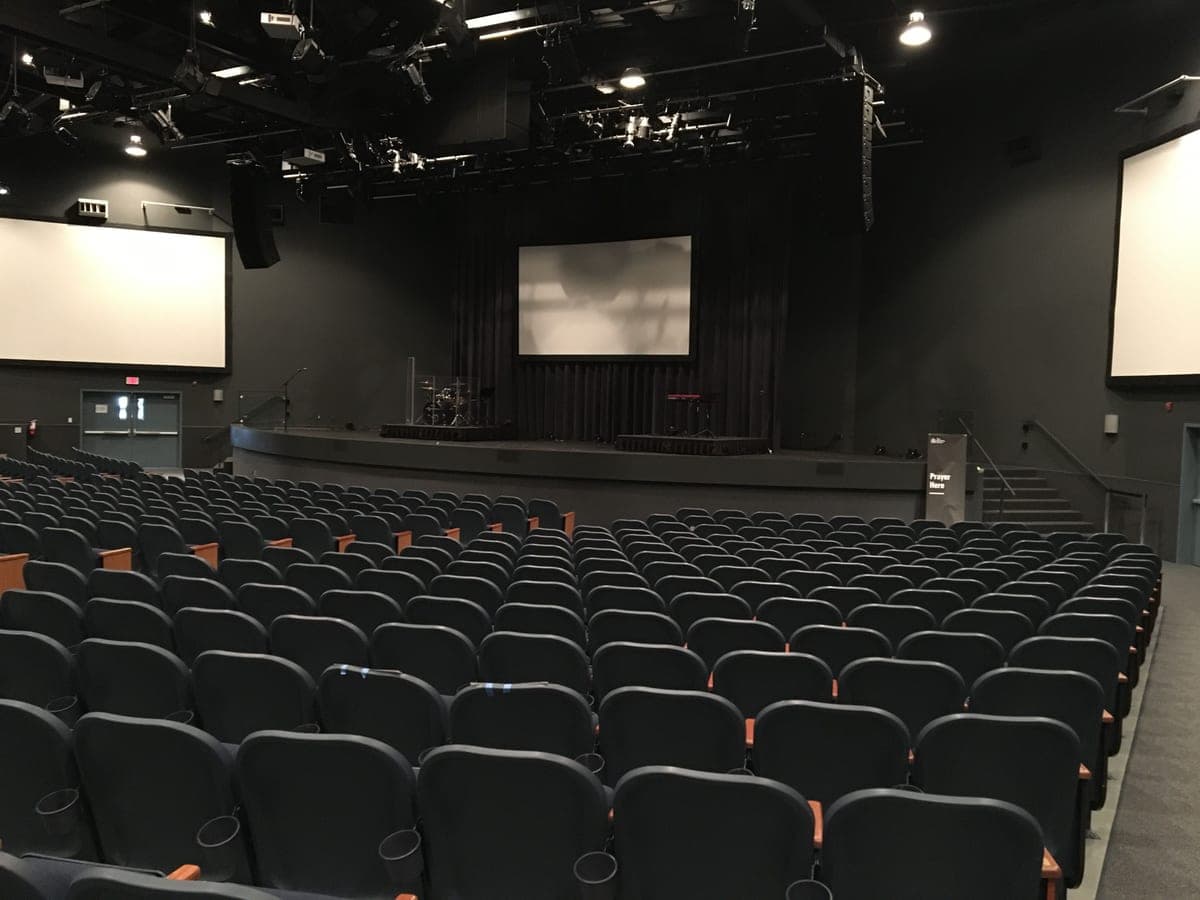
The images here are licensed stock photographs chosen to show the kind of equipment involved. They are not photographs of AyalaKi Services’s own installations, and this space is reserved for real job photos once they are available.
Speaker coverage, mixing, microphones and training for your volunteers.
Read more
A stream one volunteer can start, with audio taken from the desk.
Read more
Published budget tiers and per-seat benchmarks, attributed and dated.
Read more
The practical build order, with the bitrate targets platforms publish.
Read more
For conferences and one-off events rather than weekly services.
Read more
No obligation and nothing to buy at the end of it. The output is a written list of priorities for your room.