Church AV consulting
The wider assessment: priorities, phasing, and reading a quote you already have.
Read more
Church sound design and installation for small and medium DFW congregations. Speaker coverage worked out from your room shape and seating, a console your volunteers can actually run, and training as part of the job rather than an afterthought.
Who this is for
Small and medium DFW churches replacing or repairing a sound system
A loudspeaker throws sound in a pattern, not in all directions equally. Designing a church system is mostly the work of choosing patterns and aiming them so every seat gets roughly the same amount of direct sound, and so as little as possible lands on the ceiling, the rear wall and the side walls, which are the surfaces that send it back as reflection.
That is why the shape of your seating matters more than the size of your congregation. A long, narrow sanctuary needs a different pattern from a wide fan-shaped one. A balcony means the seats underneath it get almost no direct sound from the main speakers, which is what delay fill speakers exist to solve. Seats at the far outside edges of a wide room fall outside a narrow speaker’s coverage entirely and will always sound wrong until something covers them.
None of that can be worked out from a photograph, which is why this is a site-visit job.
It is the most common complaint in church audio and it has a specific cause. Music is forgiving of reverberation; in fact a reverberant room flatters it, which is why cathedrals sound magnificent with an organ. Speech is not. Understanding speech depends on hearing the rapid consonant transitions that distinguish one word from another, and a strong reflection arriving a few milliseconds after the direct sound masks exactly those.
Turning the system up makes the direct sound and the reflection louder in equal measure, so it does not help and often makes it worse. The two things that do help are aiming the energy at the people rather than the surfaces, and absorbing the worst reflections. A hard rear wall facing the platform is the usual culprit, and treating it is frequently the single highest-value change available in the building.
Count your busiest service, not your average one, and count sources rather than people.
A church with a four-person worship team and a keyboard is past a basic eight-channel mixer before it expects to be. Buy a couple of channels beyond your count: expanding later usually means replacing the console rather than adding to it.
For most churches the answer is digital, and the reason is scene recall rather than sound quality. A digital console remembers the settings that worked last Sunday and restores them at the push of a button, which matters enormously when a different volunteer is at the desk each week. It also gives you per-channel processing that would cost a rack of outboard equipment in the analog world.
The counter-argument is real and worth taking seriously: an analog console with one knob per function is immediately legible to someone who has never seen it before, and a church whose service is one microphone and a hymn does not need scenes. If that is your situation, simplicity is a feature.
One practical point either way: put the console where the operator can hear what the congregation hears. A mixing position in a back room behind glass, or tucked under a balcony, means the person mixing is working blind. It is a surprisingly common and entirely fixable mistake.
Wireless microphones are the component most likely to produce a mystery fault, and almost always for the same reason: two systems fighting for the same frequency, or a frequency band that has become crowded. A church with four wireless units bought at different times from different suppliers is a church with intermittent dropouts.
The fixes are unglamorous. Coordinate frequencies across all units rather than letting each pick its own. Keep receivers within sensible line of sight of where the microphones are used. Replace batteries on a schedule rather than when something fails mid-service. And keep one wired microphone available at the pulpit as a fallback, because wired microphones do not have bad days.
Before replacing a system, it is worth finding out what is actually broken. Common faults that masquerade as “the system is worn out”: a failed amplifier channel feeding one speaker, a bad cable or connector, a blown driver in one cabinet, wireless microphones interfering with each other, and a console setting nobody can find.
Diagnosing that costs a visit, not a system. If the outcome is that two components need replacing and the rest is fine, that is the honest answer and it is the one you get.
Worth raising early rather than late, because the options differ a lot in installation cost and some of them are much cheaper to design in than to retrofit. Assistive listening in a place of public assembly can fall under accessibility requirements, and the main choices are an FM or infrared system with receivers the church lends out, or an induction hearing loop that works directly with hearing aids. A loop is the better experience for the people who need it and the more involved installation, because it means a wire run around the seating area.
No structural or rigging engineering: hanging a heavy speaker array from a roof structure needs a structural opinion, and that is a separate professional. No stage or platform construction. No electrical work requiring a new circuit. No lighting design. No music or streaming licensing, which the church holds. And no recommendation of a brand for its own sake; what gets specified follows from your room, your team and your channel count.
Next: what a church sound system costs according to published figures, or church live streaming setup if streaming is the next phase.
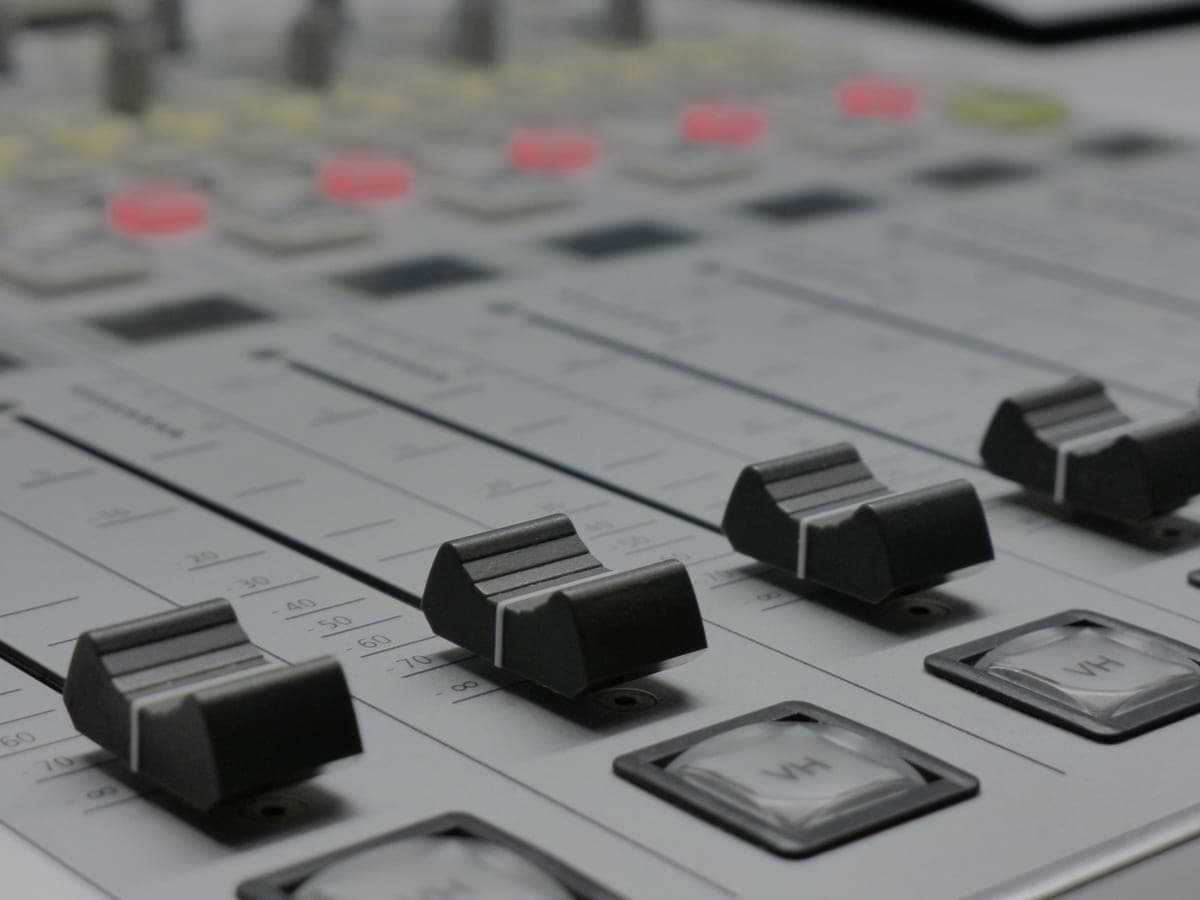
The images here are licensed stock photographs chosen to show the kind of equipment involved. They are not photographs of AyalaKi Services’s own installations, and this space is reserved for real job photos once they are available.
The wider assessment: priorities, phasing, and reading a quote you already have.
Read more
Churches buy both, usually together, and the stream depends on the sound.
Read more
Published tiers by seat count and the per-seat benchmarks behind them.
Read more
Screens, projection and general AV for halls and fellowship spaces.
Read more
Hearing a service is the only honest way to assess a sanctuary. The visit is free and ends with written priorities.