Structured Cabling
Cat6 and Cat6a drops terminated on a patch panel, labeled at both ends, tested, and handed over with a run schedule.
See what's included
Fort Worth splits neatly into two kinds of job. South and west of downtown you have early-20th-century housing stock in neighborhoods with real preservation constraints. North along the Alliance corridor you have new tilt-wall distribution and office space where the constraints are fire code and cable distance. Both are normal work; they are not the same work.
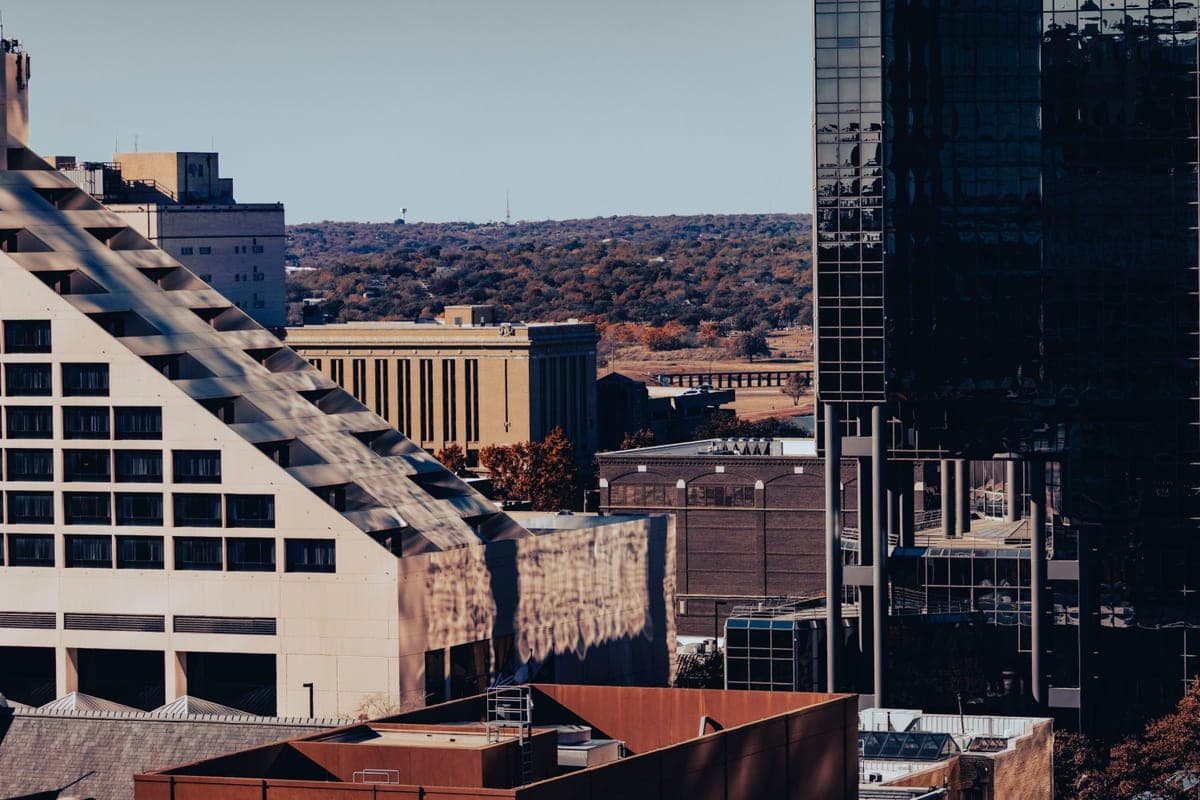
Fort Worth, Texas
These are the things that actually move a quote here, as opposed to the things every installer's city page says.
Fairmount is one of the larger historic districts in the southwestern United States, and Fort Worth's historic preservation rules take exterior appearance seriously. For camera and access-point work that changes the approach rather than preventing it: equipment goes on less prominent elevations, cable is routed to avoid crossing a street-facing facade, and visible hardware is kept off the front of the building. It is worth checking your property's designation before planning exterior mounts.
A lot of Near Southside housing has a steep, shallow roof, knee walls, and an attic you can reach but not easily move through. That rules out the long attic crossings that make newer homes quick to cable, and it tends to push the design toward fewer, better-placed runs and a central equipment position closer to the middle of the house.
New distribution and office buildings in north Fort Worth are large, and the first real constraint is the 100-meter copper channel limit rather than the building fabric. Spaces that size need intermediate switch locations or fiber between them, planned at design time. The second constraint is cable rating: where a run passes through a ceiling space used to move building air, plenum-rated cable is a fire-code requirement, and that is checked against the building rather than assumed.
Fort Worth is at the western end of the service area, which matters mainly for jobs that need more than one visit. Where a project would otherwise mean several separate trips, the work gets sequenced into fewer, longer visits. It is better to say that up front than to discover it halfway through a schedule.
Ordered by what the search data for this part of the metro actually shows. Every service is available across the whole area.
Cat6 and Cat6a drops terminated on a patch panel, labeled at both ends, tested, and handed over with a run schedule.
See what's included
Wired PoE camera systems you own outright, with the recorder, cabling and remote viewing set up and labeled.
See what's included
Speaker coverage designed for your room shape, a console your volunteers can run, and training as part of the job.
See what's included
Displays, speakers, sources and control wired and configured so one remote or one tablet runs the room.
See what's included
Hybrid meeting rooms where remote attendees can hear everyone, built around the room's acoustics and its network drop.
See what's included
Fort Worth and Tarrant County are inside the service area, including the Near Southside, the Cultural District, the TCU area, Ridglea and the Alliance corridor to the north.
There is no office to visit and no street address on this site, because AyalaKi Services works at your building rather than from a shop. The way to start is a phone call on (214) 290-5914 or the contact form, followed by a free site visit.
Also covered: Dallas and Plano. The full picture is on the DFW service area page.
The images here are licensed stock photographs chosen to show the kind of equipment involved. They are not photographs of AyalaKi Services’s own installations, and this space is reserved for real job photos once they are available.
Looking for something specific in Fort Worth? Start with security camera installation, network installation or church AV consulting.
The visit establishes the cable route, the equipment positions and the constraints, and ends with a written scope.