Network installation
The hub page: switching, wireless, PoE budgets and the 100-meter limit.
Read more
Cat6 and Cat6a cabling for Dallas offices, retail units, clinics and warehouses. Every drop terminated on a patch panel, labeled at both ends, tested, and handed over with a schedule showing what goes where.
Who this is for
Offices, retail units, warehouses and clinics across DFW
A drop is one cable run from the patch panel to one outlet, terminated and tested at both ends. It is the unit this work is scoped and priced in, and getting the count right is most of getting a quote right.
Counting drops is not the same as counting rooms or desks. A desk that needs a computer and a desk phone on separate ports is two drops. A ceiling access point is a drop. Each camera is a drop. A wall-mounted display that will take a streaming device and a control system is usually two. A printer alcove is one. Walking the building and listing outlets is the only way to arrive at a number that holds.
Spare capacity is worth deciding deliberately rather than by accident. Pulling two cables to a position instead of one costs very little extra while the route is open, and the second one is there when something changes. A common approach is a spare at every outlet that is hard to reach, and none where re-pulling would be easy.
Cable rating is fire code, not a quality tier, and it is the main reason two commercial quotes can differ substantially for the same number of drops.
Whether your ceiling void is a plenum is a property of the building’s mechanical design, not something to assume from how it looks. It is established at the site visit. A quote produced without that check is a quote that can change later, which is the main thing a written scope is supposed to prevent. The relevant codes sit with the NFPA, and installation practice with TIA and BICSI.
Every run comes back to one place, so where that place is sets every cable length in the building. Four things make a good comms position:
On commercial sites this is often an existing comms room that has accumulated fifteen years of undocumented cable. Part of a cabling job is frequently tidying that: new patch panel, cable management, and a schedule that says what each port is.
Terminating a run means landing the eight conductors in the right order at both ends, keeping the twist as close to the termination point as possible, and not exceeding the cable’s bend radius anywhere along the route. Most intermittent faults in a cabling system come from exactly these three things rather than from the cable itself.
Testing is what proves it. Every run is tested after termination and the results form part of the handover. A test identifies miswires, split pairs, excessive length and marginal performance that would otherwise surface as a port that works for a laptop and fails for a camera. An untested run is a run you find out about during a deadline.
Labeling is the cheapest thing in the whole job and the one most often skipped. Both ends of every cable, matching the patch panel port, and a written schedule. In five years, when somebody else is standing in the comms room, that schedule is the difference between a five-minute job and a morning with a tone generator.
If the building is being fitted out, cabling belongs in the sequence before the ceiling grid and the drywall go in. Cable pulled into an open ceiling costs a fraction of the same cable fished into a finished one, and the routes are better because nothing has to be worked around. If you have a fit-out program, the cabling slot is right after first-fix electrical and before the ceiling closes.
Retrofit is normal work and perfectly feasible; it is simply slower, and the building decides how much slower. An accessible suspended ceiling is close to the fit-out case. A converted warehouse with exposed deck and brick, which describes a lot of Deep Ellum and Design District space, means visible surface containment run on a deliberate line, because there is nowhere to conceal it and pretending otherwise produces a worse result.
No electrical work requiring a new circuit. No fiber splicing or outside-plant work. No structural alteration, core drilling through structural elements, ceiling grid replacement or decorating. No provision of your internet circuit. Making good is limited to the penetrations made, in positions agreed before work starts.
If cameras are part of the same project, read small business security camera installation, because combining them is one cable pull rather than two.
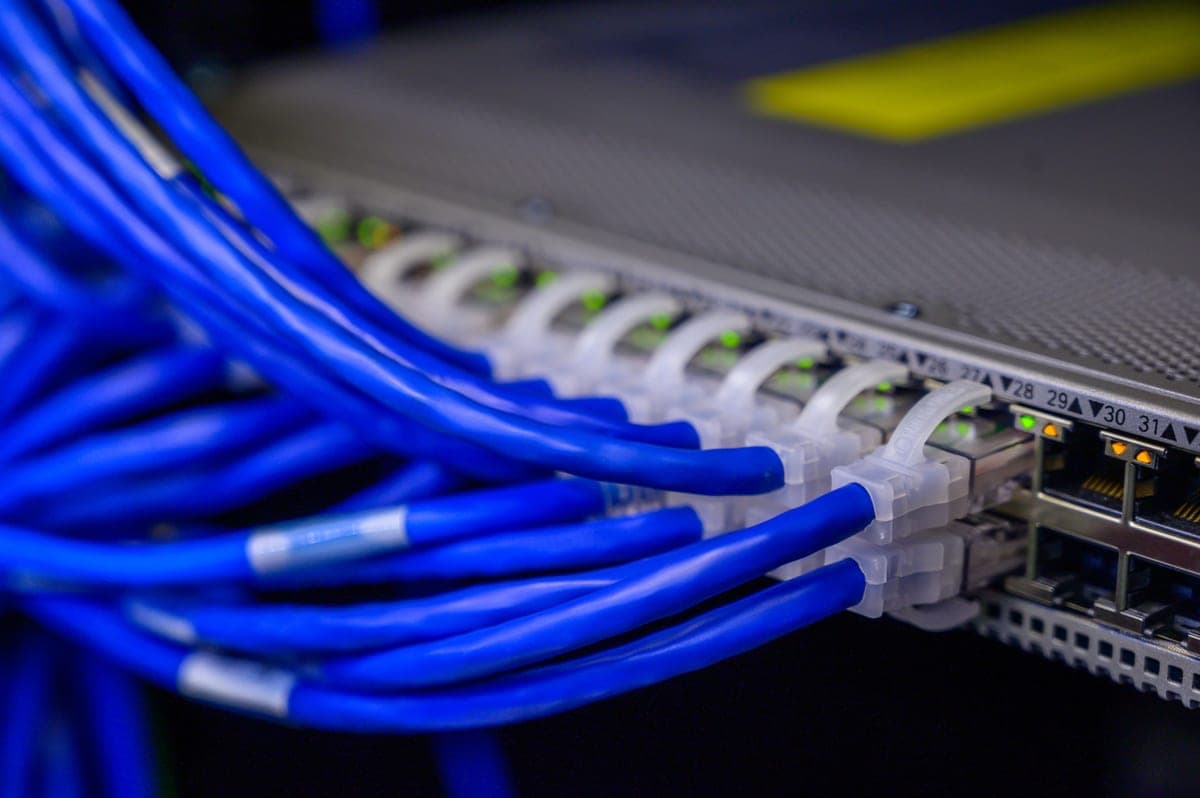
The images here are licensed stock photographs chosen to show the kind of equipment involved. They are not photographs of AyalaKi Services’s own installations, and this space is reserved for real job photos once they are available.
The hub page: switching, wireless, PoE budgets and the 100-meter limit.
Read more
Camera runs share the same containment. Doing both at once is one mobilization.
Read more
Prewar plaster, converted warehouses and larger lots each change the method.
Read more
Historic districts south of downtown, large tilt-wall buildings to the north.
Read more
Cabling is quoted from a walk of the building. The visit is free and produces a drop schedule you can compare against any other bid.