Security camera installation in DFW
The full picture: equipment, cabling, recording and how a job runs.
Read more
Outdoor cameras positioned around the ways someone can actually reach your house, cable run through the attic rather than stapled down a wall, and a recorder that keeps working when the internet does not.
Who this is for
Homeowners in Dallas, Fort Worth, Plano and the surrounding metro
Start outside, not inside. Walk the property the way an unfamiliar person would and list every route to the building: the front door, the driveway and the street approach, the back door or patio, the side gate, and any second street frontage if you are on a corner. That list is your camera count. It is usually four to six on a single-family home, and it does not grow much with square footage, because a bigger house rarely has more ways in.
Height and angle matter more than resolution. Eight to ten feet is the working range: high enough that nobody can reach the camera, low enough that you get a face rather than a scalp. Angle the camera across the approach instead of straight down it, so somebody walking toward the house passes through the frame rather than appearing in it already at the door.
Mounting under a soffit is worth asking for by name. It shades the lens from direct Texas sun, keeps rain off the housing, and puts the camera out of the path of lawn sprinklers, which are a surprisingly common cause of a camera that goes cloudy after a season.
Most single-family homes in this metro cable the same way: up into the attic, across above the ceiling, and down through the soffit at each camera position, with everything terminating at one central point. That central point should be somewhere ventilated and reachable — a utility room, a closet or a garage wall. The one place to avoid is the attic itself, because a recorder in a DFW attic in August is a recorder with a short life.
Older parts of Dallas change this. Prewar housing in Lakewood, the M Streets and much of Oak Cliff has plaster over wood lath rather than drywall, no conduit anywhere, and a pier-and-beam foundation, which at least gives a crawl space as a second routing option. Plano and most suburban construction from the 1980s onward is the opposite: a decked, walkable truss attic that makes retrofit cabling genuinely straightforward. The Dallas service area page covers the neighborhood-by-neighborhood differences.
A detached garage at the back of a lot is the usual surprise. Getting a camera there means outdoor-rated cable across the yard, normally buried in conduit, and it is a trench rather than an afternoon. It belongs in the quote, not in a change order.
Note what is not on that list: a monthly subscription. A local recorder means footage is stored at your house and there is nothing to pay to keep watching your own cameras. Cloud clip storage is an optional extra on some systems, not a requirement.
Cameras pointed at your own property are uncontroversial. Cameras that frame a neighbor’s back yard or windows are worth avoiding on both neighborly and practical grounds, and the fix is usually just a few degrees of rotation or a privacy mask in the recorder, which blanks part of the frame before it is ever recorded.
Interior cameras need a different conversation, and it should be had with everyone who lives in the house before anything is installed. One or two at a choke point, such as a hallway or the top of the stairs, is genuinely useful because anyone moving through the house passes them. Cameras in individual rooms are much less useful and much more intrusive. Audio recording is a further step again and is worth leaving off unless you have a specific reason for it.
North Texas is hard on outdoor electronics: long stretches above 100 degrees, direct sun, hail, and the occasional hard freeze. Three things follow from that. Outdoor cameras should be rated for outdoor use rather than simply placed outside under cover. Shaded mounting positions last longer than exposed ones. And the cable entry at the camera should be sealed properly, because water running down a cable into a housing is a far more common failure than the camera itself failing.
Hail is the one risk you cannot fully design out. Soffit mounting helps because the overhang takes the hit, which is another reason it is the default recommendation here.
No alarm monitoring and no central-station response: that is a monitoring company’s service, and a camera system works perfectly well alongside one. No electrical work needing a new circuit. No structural work or drywall repair, although the cable route is planned to keep penetrations minimal and in agreed places. And no phone quotes, for the same reason as everywhere else on this site: the cable path is the cost.
Related reading: what security camera installation costs, and home network installation if the house needs the network capacity to carry the cameras in the first place.
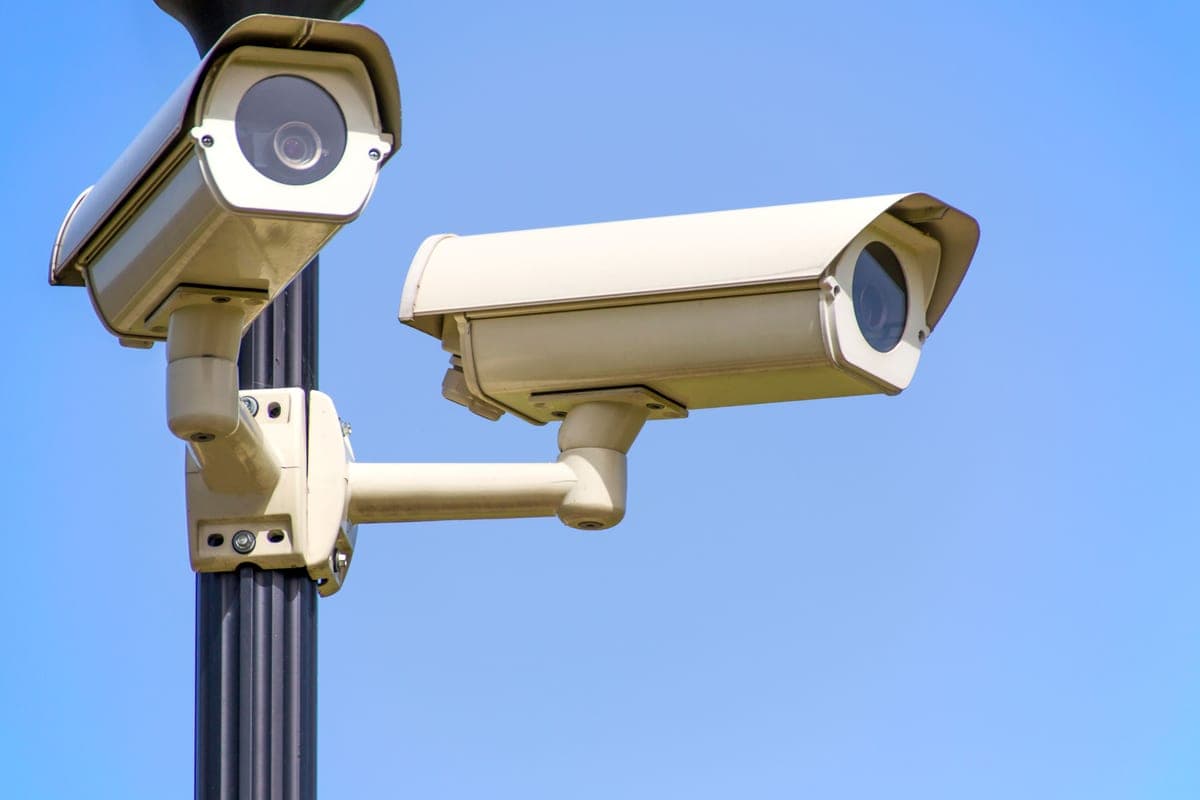
The images here are licensed stock photographs chosen to show the kind of equipment involved. They are not photographs of AyalaKi Services’s own installations, and this space is reserved for real job photos once they are available.
The full picture: equipment, cabling, recording and how a job runs.
Read more
Cameras sit on your home network, so the network has to be able to carry them.
Read more
A method for counting positions from approaches rather than from rooms.
Read more
The commercial version: access control, cable ratings and longer retention.
Read more
Published per-camera and per-system figures, with the drivers that move them.
Read more
Walkable attics, builder media panels, and what HOAs tend to care about.
Read more
The site visit is free and ends with a camera plan and a written number. If four cameras is the honest answer, that is what the quote says.